
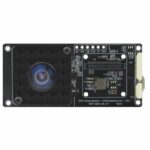
RHP-BOS-DS-IF Dual Thermal Sensor Interface
- Thermal & Visible Camera Enclosed In One Package
- Dual Camera Control via Serial Connection, Push Button, Receiver PWM or Wireless Joystick
- 6 to 26 Volt DC Input
- Multi Window Mode – PiP, Split View, Single and Quad view
- 1920 x 1080 HD Visible camera included
- Onboard IMU for easy integration with a gimbal
IR Cut Filter Notice:
The RHP-BOS-DS-IF Dual camera interface includes a visible camera and lens and offered with or without an infrared cut filter.
An infrared cut filter (IR-cut filter) is used to block light with wavelengths longer than visible light while transmitting visible light. IR cut filters can operate by either reflecting or absorbing the light to be blocked. IR cut filters are often used in solid state (CCD or CMOS) video cameras to block infrared light, which otherwise causes a lowering of the contrast due to the high sensitivity of many camera sensors to near-infrared light. IR cut filters for this purpose are mostly operating by reflecting the IR portion of the light.
This product has multiple variants. The options may be chosen on the product page